
Empower Indigenous Businesses —Prof. Bokpin
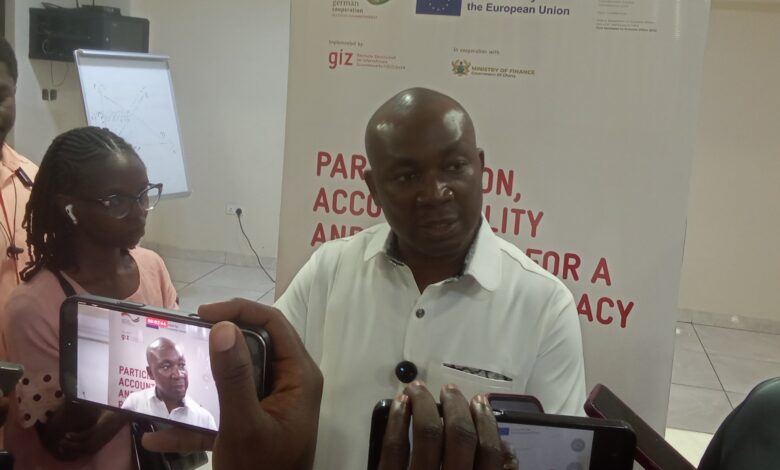
Ghana must be deliberate in empowering indigenous businesses if it wants to achieve sustainable economic transformation.”
That was the strong message from Professor Godfred Alufar Bokpin, Professor of Finance and public policy advocate, at a zonal capacity-building workshop on Public Financial Management (PFM) organised by the German Development Cooperation (GIZ) in collaboration with the Media Foundation for West Africa (MFWA).
According to Prof. Bokpin, Ghana has failed to intentionally nurture indigenous businesses into globally competitive enterprises, unlike countries such as Nigeria, South Africa and Morocco, where deliberate policies have helped local companies grow into continental and global giants.
He noted that although Ghana is among the eight largest economies in Africa, the country has no indigenous business among the continent’s leading corporate giants, describing the situation as unfortunate.
“The private sector is our player. If we want to win the game, then we must deliberately support indigenous businesses to grow from micro to small, from small to medium, from medium to large, and eventually into global companies,” he stressed.
Prof. Bokpin criticised the practice where businesses rise and fall with changes in political administration, saying such a trend discourages investment and weakens the country’s economic growth.
He urged successive governments to support local businesses irrespective of political affiliation, insisting that politicians should not see successful Ghanaian entrepreneurs as threats but as partners in national development.
The workshop formed part of efforts to strengthen public financial management and fiscal decentralisation through enhanced media and civil society oversight. It aimed at equipping journalists and civil society organisations (CSOs) with practical skills to promote transparency, accountability and prudent management of public resources.
Implemented under the Participation, Accountability and Integrity for a Resilient Democracy (PAIReD) programme, the initiative was commissioned by Germany’s Federal Ministry for Economic Cooperation and Development (BMZ), co-financed by the European Union in Ghana and the Swiss State Secretariat for Economic Affairs (SECO), and implemented by GIZ in partnership with the Ministry of Finance.
The programme brought together selected journalists and CSO representatives from the Ashanti, Eastern, Oti, Volta, Western North, Western, Central and Greater Accra regions.
Participants were taken through practical sessions on local public finance, the budget cycle, budget analysis, fiscal decentralisation, Domestic Revenue Mobilisation (DRM), tax progressivity, tax administration, public expenditure analysis, public goods, externalities, efficiency, internal and external controls, gender and public finance, tax estimation and other key aspects of public financial management.
Also addressing participants, GIZ-PAIReD Component Manager, Dr. Jürgen Eheke, said he expected government to maintain its fiscal consolidation agenda during the upcoming mid-year budget review.
He said the review should provide updates on Ghana’s exit from the International Monetary Fund (IMF)-supported programme, implementation of the Policy Coordination Instrument (PCI), government revenue performance and measures to sustain macroeconomic stability while driving resilience, structural transformation and productivity growth.
The organisers expressed confidence that the training would strengthen the capacity of journalists and CSOs to monitor public spending, hold public officials accountable and promote evidence-based reporting that supports transparency and good governance.