

Nursing Students Cautioned Over Over-Reliance on AI and Social Media Tools

The Level 400 Nursing and Midwifery students of the Christian Service University have been cautioned against over-reliance on Artificial Intelligence (AI) and social media tools in their academic and clinical work, amid growing concerns about the impact of digital technologies on healthcare practice.
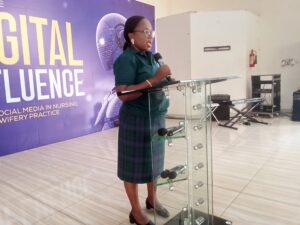
The caution was sounded during a research seminar held on Thursday, April 16, 2026, under the theme “Under the Digital Influence: AI and Social Media in Nursing and Midwifery Practice.” The seminar brought together students, lecturers, and resource persons to examine both the benefits and risks associated with emerging digital technologies in healthcare delivery.
Delivering the keynote address, computer scientist Mr. Victus Elikplim Lumorvie warned that while artificial intelligence has become a powerful support tool in education and healthcare, it must not be allowed to replace critical thinking and professional judgment.

He explained that AI systems operate based on data patterns and lack human qualities such as empathy, ethical reasoning, and accountability.
“The danger is not the technology itself, but uncritical dependence on it,” Mr. Lumorvie cautioned, stressing that nurses and midwives remain fully responsible for every clinical decision they make, regardless of technological assistance.

He further observed that social media platforms such as TikTok, Instagram, and X (formerly Twitter) have become informal learning spaces for students, but warned that much of the content shared online is often misleading or unverified.
According to him, popularity on social media does not equate to accuracy or professional credibility, adding that misinformation in healthcare could endanger patient safety.

Mr. Lumorvie also raised ethical concerns regarding the use of digital tools in healthcare training, particularly the sharing of patient information online and the use of AI-generated content without proper verification.
He urged students to treat AI platforms such as ChatGPT and Clinical Decision Support Systems as learning aids only, emphasizing the need to cross-check all information with approved medical textbooks and academic sources.

The seminar also featured vibrant student activities, including theatrical performances that highlighted the influence of artificial intelligence and social media on modern healthcare education.
An educative presentation titled “AI and Social Media from a Student’s Point of View” was also delivered by Ephraim Osei Gyasi and Florence Dzifa Bedzra, who discussed how students interact with digital platforms in their academic and clinical training, highlighting both opportunities and challenges.

The second session of the programme featured poster presentations and group activities held under tents, where students showcased research and engaged in discussions on the role of technology in nursing and midwifery practice.
The seminar ended with a strong call for responsible use of digital tools, with participants urged to strike a balance between technological assistance and the development of strong clinical reasoning and professional ethics.