
LPG Blames Recurring Floods on Government Failure

The Liberal Party of Ghana (LPG) has blamed the persistent flooding in various parts of the country on what it describes as government failure, citing years of poor planning, weak enforcement of drainage regulations and inadequate investment in flood control infrastructure.
In a press statement issued on June 9, 2026, the party said the devastating floods affecting communities across Ghana are not merely the result of heavy rainfall but are symptoms of deeper governance challenges that have been ignored for years.
According to the LPG, every rainy season leaves many Ghanaians grappling with the loss of lives, property and livelihoods, yet authorities continue to offer excuses instead of implementing lasting solutions.
The party argued that flooding has become a recurring national disaster because governments have failed to take proactive measures despite repeated warnings from experts and lessons from previous incidents.
“The current situation exposes a serious gap between government rhetoric and reality,” the statement noted, stressing that a government should be judged by its preparedness and ability to protect its citizens.
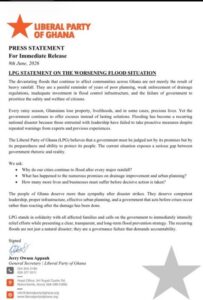
The LPG questioned why major cities continue to flood after every heavy rainfall and demanded answers regarding the numerous promises made over the years to improve drainage systems and urban planning.
It further asked how many more lives and businesses must suffer before decisive action is taken to address the perennial problem.
The party said Ghanaians deserve more than sympathy after disasters strike, calling for competent leadership, improved infrastructure and effective urban planning to prevent future flooding.
While expressing solidarity with affected families, the LPG urged the government to immediately intensify relief efforts and present a clear, transparent and long-term flood prevention strategy.
Signed by the party’s General Secretary, Jerry Owusu Appauh, the statement concluded that the recurring floods are “not just a natural disaster” but a governance failure that requires accountability and urgent action.