

GCMA Demands Enforcement of 2009 White Paper
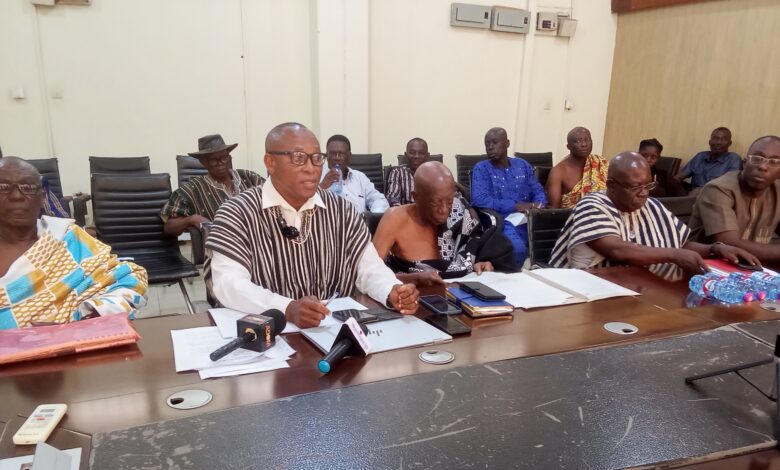
The Ghana Cooperative Marketing Association (GCMA) has called on President John Dramani Mahama to urgently intervene in what it describes as the unlawful occupation of its properties across the country.
At a press briefing held in Kumasi on Wednesday, March 4, 2026, the Association appealed for the immediate enforcement of a 2009 Government White Paper issued under former President John Agyekum Kufuor, which directed the restoration of GCMA’s properties and the payment of outstanding rental arrears.
According to the leadership of GCMA, despite the Deed of Transfer signed on January 5, 2009, the directive has not been fully implemented, leaving the Association dispossessed of several properties nationwide.
Historic Role in Cocoa Sector
Tracing its roots to 1928, when cocoa farmers at Alasomanso in the Ashanti Region formed group fermentaries, GCMA grew to become a major indigenous cocoa buying and marketing organisation. By 1948, it reportedly handled more than 40 percent of Ghana’s cocoa exports.
The Association noted that it was formally established in December 1944 as the first Ghanaian farmers’ organisation engaged in cocoa purchasing, competing with foreign firms such as UAC, Cadbury and Fry, G.B. Ollivant, and Busi and Stevenson during the Gold Coast era.
At its peak, GCMA was considered a key pillar of Ghana’s agricultural economy, supporting rural livelihoods and contributing significantly to national revenue.
Allegations of Unlawful Occupation
GCMA alleges that several of its properties are currently occupied by state institutions and private individuals without proper compensation.
Institutions mentioned include the Ghana Cocoa Board (COCOBOD), the Agricultural Development Bank (ADB), and the Social Security and National Insurance Trust (SSNIT).
According to the Association, COCOBOD occupies a number of GCMA properties in Accra and other parts of the country without paying market-rate rent. ADB is said to be using GCMA’s property in Adum, Kumasi, as its regional office, while SSNIT allegedly occupies the former Ghana Cooperative Bank building in Accra Central.
GCMA further claims that some private individuals are in possession of its properties without proper title or full payment. The Association maintains that it owns about 500 properties nationwide, many of which are allegedly being illegally occupied or sold.
Human Impact
Board Chairman of GCMA, Daniel Kwasi Adusei, addressing members of the press, said the situation has had serious economic consequences for cocoa farmers and former workers of the Association.
He explained that thousands of retired cocoa farmers and former employees who invested in the cooperative are facing hardship due to the prolonged dispute. He added that communities which once benefited from GCMA’s operations are now struggling.
“This is not just about buildings. It is about the livelihoods and dignity of our members,” he stressed.
Call for Immediate Action
GCMA is demanding the immediate implementation of the 2009 Government White Paper, full restoration of all its properties nationwide, a comprehensive audit and payment of rental arrears owed by all occupying entities at market rates, and an independent valuation of its assets to determine appropriate compensation.
The Association is also calling for a halt to any further sale or transfer of its properties, a government-led investigation into the alleged unlawful occupation and transfer of its assets, and the establishment of a formal mediation process to resolve all outstanding disputes.
GCMA urged the Attorney General’s Department to provide legal guidance on enforcement mechanisms and appealed to the media and civil society to treat the matter as one of national importance.
The Association expressed hope that President Mahama will take decisive steps to ensure the full implementation of the 2009 directive and bring final resolution to the long-standing issue.