
Media Houses Tasked To Adapt Safety Policy
Media owners, managers and editors have been urged to adapt and implement the Model Safety of Journalists Policy to protect media practitioners against attacks, threats, intimidation and other dangers associated with their work.
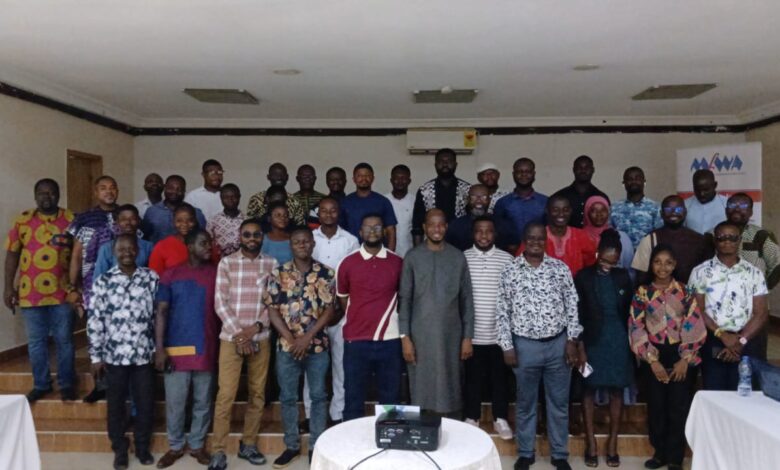
The call was made by the Programme Director of the Media Foundation for West Africa (MFWA), Dr. Kojo Impraim, and the Technical Advisor of PAIReD, GIZ Gh ana, Jonathan Donkor, at a one-day workshop for journalists, editors and media managers in Kumasi on Wednesday, November 18, 2026.
The workshop, held on the theme, “Developing and Implementing Newsroom Safety Policy,” was aimed at equipping media practitioners with the knowledge and tools to adapt the model policy to the realities and operational needs of their respective newsrooms.
Dr. Impraim said the safety of journalists should not be treated as an individual responsibility, insisting that media owners and managers had a duty to create safe working environments for their staff.
He noted that journalists played a crucial role in informing the public, exposing wrongdoing, holding those in authority accountable and strengthening democracy, but continued to face physical attacks, threats, online harassment, legal pressure, intimidation and psychological trauma.
According to him, the dangers were not limited to election periods but also arose during demonstrations and investigations into illegal mining, corruption, abuse of power and human rights violations.
He cited the unresolved murder of investigative journalist Ahmed Suale as a disturbing reminder of the dangers confronting journalists, stressing that the failure to secure justice in such cases could embolden perpetrators.
Dr. Impraim disclosed that the MFWA recorded 32 press freedom violations across 12 West African countries in the first quarter of 2026, with the figure rising to 44 in the second quarter and increasing further in the third quarter.
He explained that the model policy provided practical guidelines on risk assessment, newsroom security, physical and digital safety, legal assistance, emergency response, incident reporting and the psychological well-being of journalists.
He therefore urged media organisations to assess risks before assigning journalists to potentially dangerous locations, establish clear procedures for reporting incidents and designate officers responsible for staff safety.
He also disclosed that the MFWA had established a legal support fund to assist eligible journalists facing legal challenges in the course of their professional duties.
Mr. Donkor, on his part, said the collaboration between PAIReD GIZ Ghana and the MFWA had contributed to building the capacities of journalists, including senior and investigative reporters, while advocating a safer environment for media practice.
He described the Model Safety of Journalists Policy as an important outcome of the partnership and called on media houses to ensure that it became a working document rather than one that merely gathered dust on office shelves.
He said although journalists were often motivated by the desire to be the voice of the voiceless, they needed to remain safe to continue telling important stories.
He observed that attacks and intimidation by political actors and security personnel, coupled with economic pressures, continued to undermine the work of journalists.
Mr. Donkor stressed that the watchdog role of the media could only be effectively performed when journalists were able to work without fear for their safety and well-being.
He reaffirmed the commitment of PAIReD GIZ Ghana to supporting journalists who became victims of harassment and intimidation.
The workshop also featured training sessions by a Consultant and Lecturer at the University of Media, Arts and Communication-Institute of Journalism (UniMAC-IJ), Dr. Martin Thompson Ntem.
The sessions addressed newsroom risks, including physical, digital, legal, psychological and gender-related threats, as well as risk prevention, preparedness, incident reporting, response mechanisms, support systems and accountability.
Participants were also introduced to the purpose, scope, principles and structure of the Model Safety of Journalists Policy and undertook discussions on newsroom safety audits to identify existing protective measures and gaps requiring attention.
The project is being implemented under the Participation, Accountability, Integrity for a Resilient Democracy (PAIReD) Programme, commissioned by the German Federal Ministry for Economic Cooperation and Development (BMZ), co-financed by the European Union and the Swiss State Secretariat for Economic Affairs (SECO), and implemented by GIZ Ghana in cooperation with the Ministry of Finance.
Mr. Donkor urged media organisations to translate the policy into practical measures, saying: “Every story that has helped shape the country was told by a journalist who was able to live to tell that story. Let us therefore build newsrooms where every journalist who goes out for the next story comes back safely to tell it.”