

Journalists Play Critical Role In Ghana’s Cybersecurity Fight – Czech Deputy Ambassador
Journalists have been urged to play a critical role in Ghana’s fight against cybercrime, misinformation and other emerging digital threats.
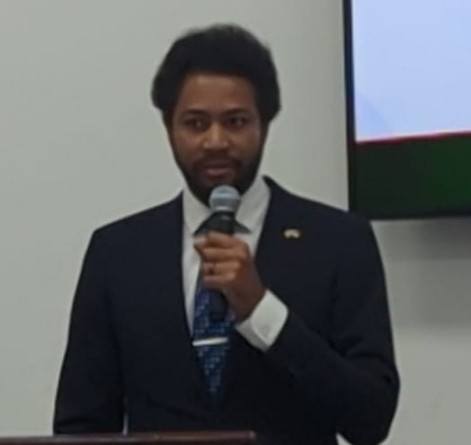
Deputy Ambassador of the Czech Republic to Ghana, Nick Ojo Omorodion, said journalists, particularly community and regional media practitioners, were strategically positioned to take cybersecurity education to the grassroots.
He made the call on Thursday, September 3, 2026, at the opening of the Kumasi edition of the second phase of the National Community Media Cyber Capacity Building Project (NCMCCBP) held at the Kwame Nkrumah University of Science and Technology (KNUST).
The project is funded by the Czech Republic through its Transformation Cooperation Programme and implemented by the Africa Center for Digital Transformation (ACDT) with support from the Cyber Security Authority (CSA).
Representing the Czech Ambassador to Ghana, Pavel Bílek, Mr. Omorodion said the Kumasi edition was important because cybersecurity awareness should not be concentrated in Accra or specialised institutions.
He urged participants to use the knowledge acquired to educate their colleagues, listeners, readers and viewers about cyber threats and responsible digital practices.
“You are not here only to gain knowledge for yourselves. Each of you has the ability to carry that knowledge further through your newsroom, your radio station, your language and your community,” he said.
According to him, one trained journalist could reach thousands of people, while an accurate report or timely warning could prevent individuals, families and businesses from becoming victims of cyber fraud.
Cybersecurity Training
As part of the programme, Eric Kafui Bansah, Principal Manager, Community-Based Awareness and Communication (CBAC) at the Cyber Security Authority, took participants through cybersecurity, cybercrime awareness and community-based awareness and communication.
He also highlighted the role of media practitioners in creating cybersecurity awareness and helping communities understand and respond to emerging cyber threats.
Nelson Horald Darko, Senior Manager, Child Online Protection at the Cyber Security Authority, also trained the participants on Child Online Protection, sextortion and cyberbullying.
His session focused on the dangers children and young people face online and the need for parents, schools, communities and the media to promote safer digital environments for children.
Media’s Role
Mr. Omorodion noted that community and regional media had a unique advantage in cybersecurity awareness because they understood the realities of the communities they served and could communicate in local languages.
He said the first phase of the project, held in Accra, exposed journalists to cybercrime, online fraud, misinformation, digital safety, fact-checking and responsible reporting on cyber incidents.
He stressed that cybersecurity was not merely a technical issue but affected journalists, their sources, newsrooms and the general public.
“It concerns the protection of journalists and their sources, the credibility of newsrooms, the integrity of investigations and, ultimately, the safety of citizens,” he said.
The Deputy Ambassador said the project formed part of Czechia’s broader cooperation with Ghana, including support for specialised law-enforcement capacities, public awareness and responsible communication.
He commended the ACDT for implementing the initiative and the CSA for providing technical and institutional support.
He also thanked KNUST for hosting the programme and the participating media organisations, trainers and journalists for their commitment.
Mr. Omorodion, in his concluding remarks, quoted the Akan proverb, “Tikoro nko agyina,” meaning “One head does not go into council,” to emphasise the need for collective action.
He said cyber resilience could not be achieved by one institution, profession or country but required collaboration among government institutions, security experts, journalists, academia and communities.
He urged the participants to use the knowledge gained from the programme to protect themselves, their sources and organisations while helping their audiences navigate the digital space safely.
KNUST Support
The Head of the Department of Biochemistry and Biotechnology and Vice Dean of the Faculty of Biosciences at KNUST, Professor Caleb Kesse Firempong, welcomed participants on behalf of the Vice-Chancellor.
He said KNUST was pleased to host the programme, noting that it aligned with the university’s commitment to advancing knowledge, innovation, research and human capital development.
Prof. Firempong said Ghana’s digital transformation had created significant opportunities for individuals, businesses and institutions but had also brought increasingly sophisticated cyber threats.
He therefore stressed that cybersecurity was a shared responsibility and should not be left solely to IT professionals or specialised cybersecurity institutions.
He said anyone who used a mobile phone, accessed the internet, engaged on social media, conducted digital transactions or handled information had a role to play in creating a safer digital environment.