
Mahama Urges Ghanaian Youth To Become Creators In Digital Age
President John Dramani Mahama has challenged Ghanaian youth to move beyond consuming digital technology and become creators, innovators and entrepreneurs capable of driving the country’s development.
He said the rapid growth of artificial intelligence (AI), big data, blockchain, digital commerce, automation and remote work presented significant opportunities for young people to create jobs and generate sustainable incomes.
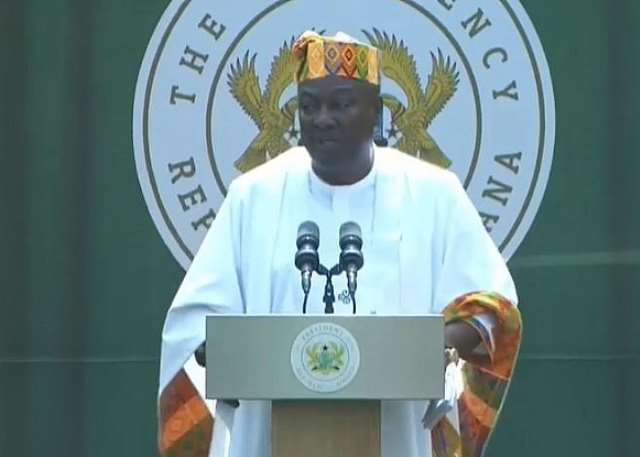
President Mahama’s message was delivered by the Minister for Youth Development and Empowerment, George Opare-Addo, at the opening of the 2026 National Youth Conference at the Great Hall of the Kwame Nkrumah University of Science and Technology (KNUST) in Kumasi.
The two-day conference, held on August 11 and 12, formed part of activities marking the 2026 National Youth Month celebration.
It was organised by the National Youth Authority (NYA) in collaboration with the Ministry of Youth Development and Empowerment on the theme: “Rebuilding Values, Inspiring Patriotism: Empowering the Youth in the Digital Age.”
The conference brought together government officials, traditional and religious leaders, academics, development partners, youth leaders and young people from across the country.
Digital Age
Speaking on behalf of the President, Mr Opare-Addo said the digital age was already here and the youth must position themselves to take advantage of it.
He challenged them to ask themselves whether they would become creators of technological change or merely consumers of technologies developed by others.
“The question is no longer whether technology will change our lives. The question is whether Ghanaian youth will be creators of that change or merely consumers of technologies created by others,” he said.
He encouraged young people to explore opportunities in digital commerce, the creator economy, automation and remote work, noting that people could live in Ghana and work for international companies while earning foreign currency.
He said technology should be used to create employment and solve problems rather than being reduced to a platform for insulting political leaders and spreading negative content.
Character
Mr Opare-Addo also stressed the importance of rebuilding values among young people, saying talent without character could undermine a person’s chances of succeeding.
He mentioned integrity, discipline, honesty, respect and responsibility as values that must guide the youth.
“Your character will determine how far your talent can take you,” he said.
According to him, young people could be highly talented but still fail to achieve their potential if they could not be trusted with responsibilities.
He therefore urged social media influencers to use their platforms responsibly, saying having thousands of followers meant little if the influence was not used positively.
Patriotism
The Minister also called on the youth to demonstrate patriotism through their everyday actions.
He explained that patriotism was not limited to singing the national anthem but included protecting public property, paying taxes, keeping the environment clean and refusing to cheat.
He urged the youth not to blame government and political leaders for every challenge confronting the country.
“If you see a problem in Ghana, don’t only complain about it. Ask yourself what you can do about it,” he said.
Mr Opare-Addo cited flooding as an example, urging citizens to stop indiscriminate dumping and take responsibility for keeping drains and their communities clean.
Youth Employment
The Director of the National Youth Authority, Abdulai Ayariga, said government was implementing a number of initiatives to equip young people with skills and connect them to employment opportunities.
He said the National Apprenticeship Programme was designed to provide practical skills to young people, particularly those who were unable to proceed to tertiary education.
According to him, the programme was being tailored to the economic needs of individual regions to enable beneficiaries to find work within their communities.
He also disclosed that the Youth Employment Agency was implementing a labour exchange programme aimed at creating opportunities for skilled Ghanaian youth to work in countries facing labour shortages.
Mr Ayariga said plans were also advanced to introduce a Domestic Care Economy programme next year to create more sustainable employment opportunities.
Private Sector
He stressed that government could not solve youth unemployment alone and called for stronger collaboration with the private sector, financial institutions and universities.
Mr Ayariga said government was also supporting young entrepreneurs through programmes under the National Entrepreneurship and Innovation Programme (NEIP), including the Adwumawura and SEEK (Student Enterprise and Innovation Development) initiatives.
He said Adwumawura would provide young entrepreneurs with training, incubation and funding, while SEEK would support tertiary students to turn their business ideas and proposals into viable enterprises.
24-Hour Economy
The Ashanti Regional Minister, Dr Frank Amoakohene, urged the youth in the region to take advantage of opportunities emerging from the government’s 24-hour economy programme.
He explained that the 24-hour economy model centres would go beyond traditional markets and include facilities such as pharmacies, clinics, schools, banks, open stores and locker stores.
Dr Amoakohene disclosed that 41 such projects were ongoing in the Ashanti Region, while similar projects were being implemented across all 261 districts nationwide.
He urged young people to engage their respective assemblies to understand projects being implemented in their communities and identify opportunities they could benefit from.
According to him, the projects would create physical jobs and provide opportunities for young entrepreneurs to establish and expand their businesses.
The Regional Minister further disclosed that government was creating opportunities for young people to join the security services, including the Police Service and the military.
He, however, noted that inadequate offices, accommodation and other logistical challenges remained a major constraint to expanding the security services.
He therefore encouraged the youth to acquire relevant skills and remain alert to opportunities being created under government programmes.