
OSP Needs Stronger Independence To Fight Corruption — CDD-Ghana Dialogue
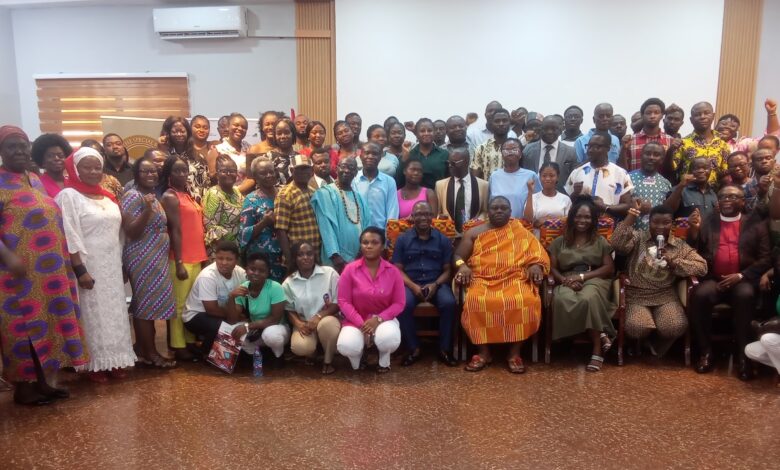
The Office of the Special Prosecutor (OSP) must be strengthened and insulated from political interference to effectively lead Ghana’s fight against corruption, stakeholders have emphasised at a regional dialogue organised in Kumasi.
The dialogue, convened by CDD-Ghana in collaboration with the OSP, formed part of efforts to deepen public understanding of the office’s mandate, assess its performance, and build consensus on reforms needed to enhance its effectiveness.
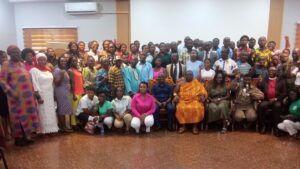
Held on Thursday, April 30, the programme brought together civil society organisations, policymakers, development partners, professional bodies, media practitioners, traditional authorities, as well as youth and women groups to foster collaboration and generate actionable recommendations.
Participants reviewed and validated findings of an eight-year assessment report on the OSP conducted by consultants of CDD-Ghana, aimed at informing evidence-based policy reforms to strengthen the institution.
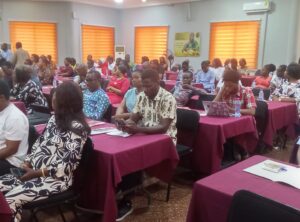
The event was supported under the Participation, Accountability and Integrity for a Resilient Democracy (PAIReD) programme, commissioned by the German Federal Ministry for Economic Cooperation and Development, co-financed by the European Union and the Swiss State Secretariat for Economic Affairs, and implemented by GIZ in partnership with the Ministry of Finance.
Speaking at the forum, Dr. Zechariah Langnel, a lecturer and consultant, stated that while the establishment of the OSP was a positive step, its current legal and institutional framework limits its independence.
He noted that the OSP, though created by an Act of Parliament, is not entrenched in the Constitution, making it susceptible to possible dissolution by future governments.
Dr. Langnel further pointed to funding and capacity constraints, explaining that although improvements have been made since 2023, the office still lacks adequate personnel, including investigators and researchers.
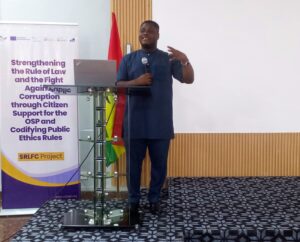
He also raised concerns about the OSP’s prosecutorial powers, stressing that Article 88 of the Constitution vests such authority in the Attorney General, thereby restricting the OSP’s operational autonomy.
According to him, the requirement for the OSP to seek authorisation from the Attorney General before initiating certain investigations undermines its effectiveness.
On performance, he disclosed that the OSP has handled 67 cases since 2023, recovered about GH¢35 million, prevented over GH¢7.1 billion in fraudulent transactions, and secured about seven convictions, all through plea bargaining.
He described the achievements as significant, considering the office’s limited resources and relatively short period of operation.
However, he cautioned that corruption remains pervasive in Ghana, referencing findings by Transparency International and Afrobarometer which continue to show high levels of perceived corruption.
Dr. Langnel stressed that the OSP alone cannot eradicate corruption and called for stronger public support and collaboration among state institutions.
He also criticised the sole sourcing provision in public procurement, describing it as a major avenue for corruption, and called for its review.
Additionally, he expressed concerns about plea bargaining in corruption cases, arguing that it could weaken deterrence and accountability.
The dialogue forms part of a three-year project funded by the European Union, GIZ and other development partners aimed at building public support for Ghana’s anti-corruption drive and strengthening the role of the OSP.