
Stop Renaming Existing State Assets – Green Tax Youth Africa
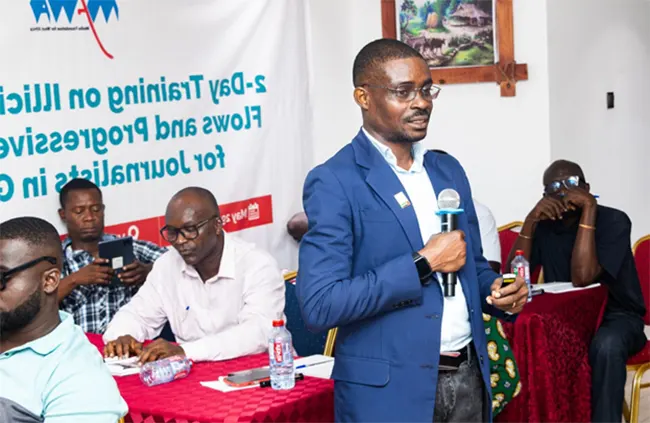
The Executive Director of Green Tax Youth Africa, Mr. Nii Addo, has called on the Government and Parliament to put an end to the practice of renaming already established state assets, describing it as a misplaced national priority amid Ghana’s pressing economic and social challenges.
In a media brief issued on February 3, 2026, Mr. Addo said Ghana is currently grappling with high unemployment, overstretched infrastructure, housing deficits, transport challenges, under-resourced health facilities, environmental degradation, and the devastating effects of illegal mining.
According to him, at such a critical stage, national attention, parliamentary time, and public resources must be focused on addressing real development issues rather than engaging in symbolic debates over renaming public institutions.
His comments follow renewed public discussions surrounding proposals to rename Kotoka International Airport and other longstanding state assets.
Mr. Addo noted that Ghana’s post-independence history reveals a recurring pattern of renaming public institutions without any measurable improvement in governance or service delivery. He cited the renaming of Jubilee House to Flagstaff House and back, the transformation of Omnibus Services Authority into Metro Mass Transit, and the rebranding of Ghana Airways into Ghana International Airlines, which eventually collapsed without accountability.
“Renaming does not create jobs. Renaming does not reduce transport fares. Renaming does not fix hospitals or solve housing shortages. It does not address illegal mining, agricultural decline, or the rising cost of living,” he stated.
He cautioned that renaming state assets without broad national consultation and historical sensitivity risks deepening political divisions rather than promoting national unity.
Mr. Addo stressed that state assets belong to the Republic of Ghana and not to successive governments, adding that their names form part of the nation’s historical memory, civic identity, and institutional continuity. Frequent changes, he said, create confusion, incur avoidable administrative costs, and project instability to both citizens and international observers.
He also raised concerns about financial prudence, noting that renaming exercises involve rebranding, signage changes, documentation revisions, legal adjustments, and public communication costs—expenses he believes are unjustifiable given the country’s limited resources.
Calling on Parliament to refocus its legislative agenda, Mr. Addo urged lawmakers to prioritize bills that promote revenue mobilisation, job creation, agricultural modernisation, health financing, infrastructure expansion, and environmental protection.
“If any government seeks to honour a national figure, the appropriate approach is to invest in new infrastructure and assign names to those new developments. That creates jobs and tangible value. Renaming existing assets does not,” he said.
Recommendations
Mr. Addo proposed that government and Parliament should establish a clear policy or legislative guideline restricting the renaming of already named state assets, except under extraordinary circumstances backed by broad national consensus.
He further called for any proposal to rename a national asset to undergo extensive public consultation, historical review, and a cost-benefit assessment.
He concluded that Ghana’s development challenge is not a naming problem but one of governance, service delivery, and economic transformation.