
Ghana Stable ‘Island’ Amid Regional Tensions – EU Envoy
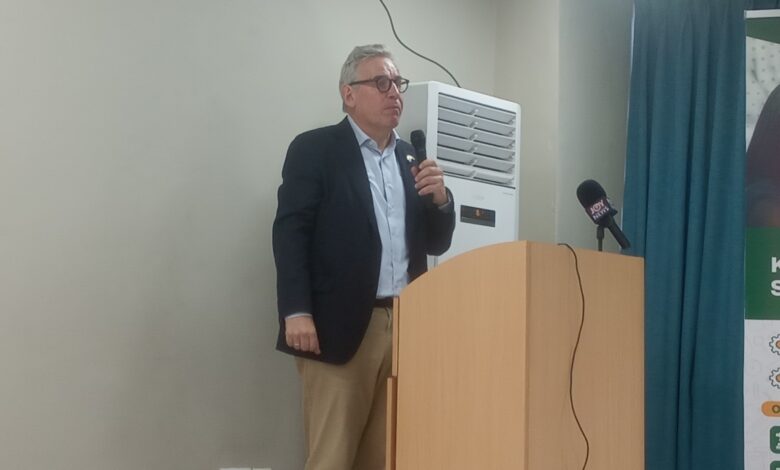
The European Union (EU) Ambassador to Ghana, Rune Skinnebach, has described Ghana as a peaceful and stable “island” surrounded by “unruly waters” as insecurity continues to escalate in parts of the Sahel and neighbouring countries.
The ambassador said the European Union remains committed to supporting Ghana to preserve its peace, democratic stability and security against possible spillover threats from troubled areas within the sub-region.
Mr. Skinnebach made the remarks during an interview with SWIFTNEWS3 at the Kwame Nkrumah University of Science and Technology (KNUST) in Kumasi, where he delivered a keynote address on scholarship opportunities at European universities.
According to him, Ghana currently enjoys a positive relationship with the EU, with over one billion euros already committed to projects in the country under the EU’s Global Gateway Investment Package for Africa.
He explained that the 150-billion-euro initiative, launched in 2022, is intended to complement traditional development financing and attract more private sector investments into African economies.
The EU envoy noted that Ghana remains the EU’s biggest partner in terms of investment, exports and development cooperation, but stressed that maintaining political and macroeconomic stability remains key to attracting more European investors.
He indicated that countries with stronger infrastructure, stable economies and business-friendly policies are more likely to attract European investments.
Mr. Skinnebach also referenced recent high-level engagements between Ghana and the EU, including the signing of the Peace and Security and Defence Partnership by Vice President Jane Naana Opoku-Agyemang and Kaja Kallas.
On Ghana’s economy, the ambassador acknowledged ongoing reforms and economic progress but cautioned that sustaining stability would require consistency in policy implementation, especially as the country moves closer to future elections.
He further praised Ghana’s democratic record since 1992, describing the country’s electoral system as successful, while urging citizens to deepen accountability and strengthen democratic participation beyond elections.