

CSOs Demand Legal Roadmap For Ghana’s Constitutional Reforms
Civil society organisations have called for the introduction of a legally binding roadmap to guide the implementation of Ghana’s ongoing constitutional reform process and prevent the exercise from being derailed by political transitions.
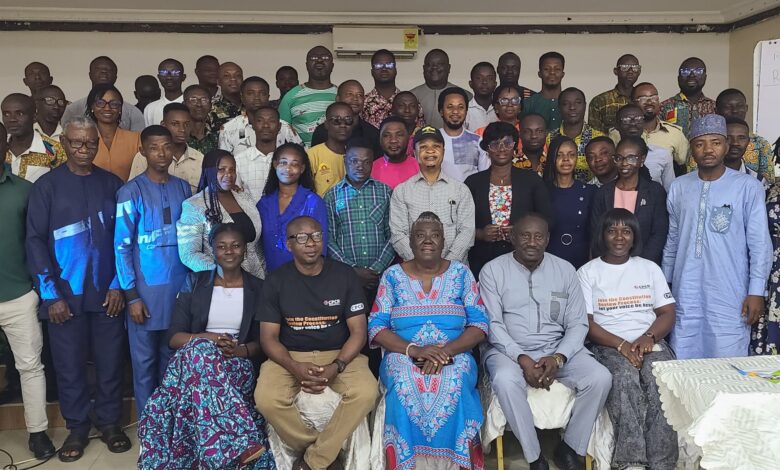
The call was made at a two-day media engagement on constitutional reforms organised by the Citizens’ Platform on Constitutional Reforms (CPCR) in Kumasi.
Victoria Asumin, a member of the Ashanti Regional Coordinating Team of Amnesty International, said the reform process had entered a critical implementation stage following the submission of the Constitution Review Committee’s report.
She said there was a need for clear timelines and institutional responsibilities to ensure that the recommendations were effectively implemented.
According to her, the Citizens’ Platform, convened by CDD-Ghana, STAR-Ghana Foundation and Democracy Hub, together with local governance networks, is advocating the passage of a Constitutional Reform Implementation and Roadmap Act.
The proposed legislation, she explained, would spell out the reforms to be undertaken, institutions responsible for each stage and deadlines for completing the various processes.
It would also provide timelines for public consultations, preparation of legislation, parliamentary consideration, civic education and referendums where required.
206 PROPOSALS
Ms Asumin said the eight-member Constitution Review Committee, chaired by Professor H. Kwesi Prempeh, submitted its final report on February 10, 2026, containing 206 proposals.
She said 149 of the proposals sought amendments to existing constitutional provisions, while 59 proposed entirely new constitutional provisions.
The committee, she noted, conducted 10 thematic stakeholder engagements, received more than 500 expert and practitioner inputs, reached over 21,500 people and received 785 written submissions.
The review, she said, sought to make constitutional governance more effective for national development while preserving Ghana’s democratic gains.
FIVE-YEAR PRESIDENTIAL TERM
Touching on some of the major recommendations, Ms Asumin said the committee had proposed extending the presidential term from four to five years.
She clarified that the proposal did not provide for a third presidential term and noted that the Government had accepted the proposed five-year tenure.
Other areas covered by the reforms include presidential powers and appointments, Parliament, local government, natural resources and public finances, independent constitutional institutions, political parties and elections, the Judiciary and accountability, and long-term development planning.
RECOMMENDATIONS NOT YET LAW
Ms Asumin stressed that the recommendations of the Constitution Review Committee had not automatically become law.
She explained that the implementation process would require the appropriate constitutional and legislative procedures.
According to her, entrenched provisions would require a referendum as prescribed by the Constitution, while other provisions would go through the relevant parliamentary and legal processes.
She disclosed that Government had inaugurated an 11-member Constitution Review Implementation Committee chaired by Presidential Legal Counsel and former Attorney-General and Minister of Justice, Marietta Brew.
The committee is expected to examine the Constitution Review Committee’s report alongside the Government’s position paper and develop a framework for implementing the proposals Government has accepted or intends to pursue.
CONCERNS OVER 2028
Ms Asumin said civil society groups were concerned that the scale of the proposed reforms could make it difficult to complete the process within the lifespan of the current Parliament.
She said the reforms reportedly involved more than 50 amendments and over 14 bills, including new legislation and amendments to existing laws.
She noted that the process could therefore extend beyond the 2028 general elections, raising questions about continuity in the event of a change of government.
The Citizens’ Platform, she said, was advocating a legally binding framework to ensure that the process continued irrespective of changes in government or Parliament.
MEDIA URGED TO LEAD CIVIC EDUCATION
Ms Asumin also urged journalists to play a leading role in educating the public on the constitutional reforms.
She said citizens could not meaningfully participate in the process if they did not understand the proposals, their implications and the responsibilities of the institutions involved.
She called for sustained funding for civic education to enable the constitutional reform conversation to reach communities across the country, particularly those with limited access to traditional and digital media.
She further urged the media to adopt accurate, balanced and issue-based reporting in covering the reform process.
WOMEN’S REPRESENTATION
The engagement also touched on women’s participation in Ghana’s political and decision-making processes.
Ms Asumin said the Affirmative Action Law Coalition, together with other women’s rights organisations, was preparing a position paper advocating proportional representation and the constitutional entrenchment of gender quotas.
She said the reform process presented an opportunity for broader discussions on the representation of women, young people and persons with disabilities in governance.
The two-day engagement, which ends today, September 30, is being facilitated by Gifty Nti Konadu, a CDD-Ghana/CPCR representative, Christopher Dapaah of the Local Government Network and members of the CPCR Regional Coordinating Team.
The organisers said the programme was aimed at equipping journalists with the knowledge to provide credible information and facilitate informed, inclusive and constructive public dialogue on Ghana’s constitutional development.